Is data at the center of healthcare for the future?

Spiros Liolis | June 2023
The Covid-19 pandemic has been a pivotal turn for the healthcare industry. Fast-tracked development of medical and biopharmaceutical medicines and vaccines, increased hospitalizations and telehealth use, strains on the healthcare workforce, and post-pandemic syndromes have introduced a need to think differently about running healthcare systems. 

Technology has taken a great leap forward with developments in data analytics, artificial intelligence (AI), high-performance computing, and cloud technologies that allow us to process data and operate with no boundaries.

But the healthcare industry is facing challenges like potential regulatory pitfalls, financial uncertainty, and stress on healthcare workers. What’s more, legacy healthcare systems often lack integration and centralized data management, and the agility needed to keep up with new technologies that enable better delivery. 

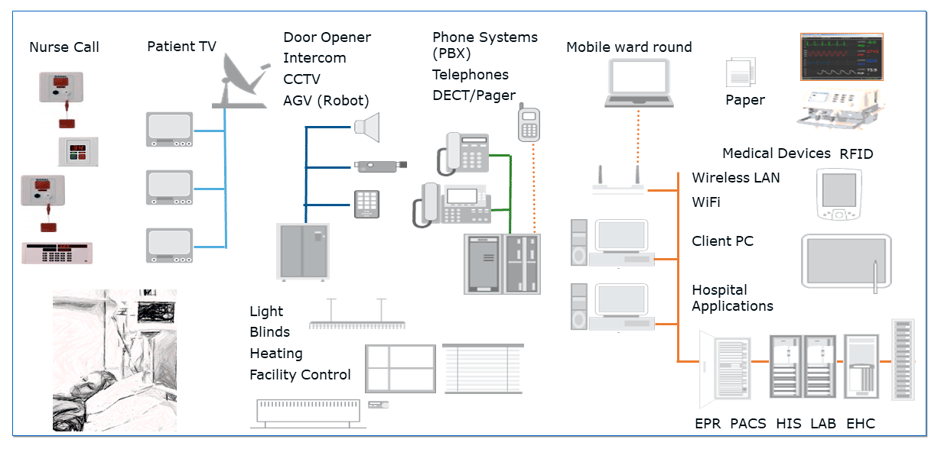
Digital Hospital EcosystemDigital hospital ecosystem

Resilient data center-supported healthcare

Responding to these challenges requires a new model of engagement. Many companies are looking at modern data center infrastructure as a way to double down on investments that support their core mission and provide differentiation from competitors. And they are looking at new ways to innovate that will allow for more experimentation and customer engagement in a way that meaningfully reduces security and compliance risk.

Even with the uncertainty surrounding the healthcare industry, healthcare providers, especially government-sponsored providers, are capitalizing on the opportunity to build new digital frameworks and technology infrastructure. This new foundation will help meet the challenges of population health management, insurance reimbursement, and chronic diseases while also meeting growing health data storage needs and increasing compliance controls for patient privacy. 

For example, Germany recently introduced the Hospital Future Act, which aims to modernize German hospitals so they are fit for the future. The act promotes modern healthcare to respond to Covid-19 and how financing investment measures can support the hospital sector. This act states: "Investments in modern emergency capacities and a better digital infrastructure, e.g. patient portals, electronic health documentation of care and treatment services, digital medication management, IT security measures, and cross-sectoral telemedical network structures, are funded.”

This places data centers at the core of service for the healthcare industry. 

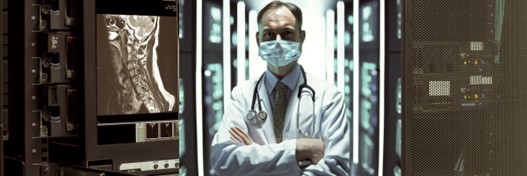
2Image created by Spiros Liolis using OpenAI’s DALL-E

Delivering on digital health

The promise is great. The data center industry has raw processing power that can analyze a large variety of data intelligently, delivering streamlined reports to providers so that they can focus on quality patient care. 

But existing healthcare systems aren’t yet mature enough to support it. A set of challenges with electronic health records (EHRs), together with lacking access to the socioeconomic, behavioral, and environmental data that would help to create truly actionable analytics at the point of care, make clinical analytics and health management challenging. 

The healthcare ecosystem has shifted from sick care to data-driven, intelligent technology health management that can improve healthcare outcomes and drive business opportunities. While it’s not easy for these technology systems to harness the expansive health data and digital content, new technologies like AI are adding to the solution. 

Offering integrated health management with your data center at the core

Ramboll is a leader in the data center industry and supports the healthcare sector with a future-forward vision for data centers. Our portfolio is ideally positioned to address the needs of patient-centric, outcome-based, future digital hospitals. We define the best strategy, either by using your own data center upgrade or a third-party data center provider, to:

  • Assess space, power, and cooling density on schedule for high-performance computing (HPC) clusters, using unique methodology and tools and years of collective intellectual property
  • Project capacity of current and for growth, including unpredictable spikes in use, with data center grade tools and solutions
  • Identify and manage (multi)vendor selection and evaluate risks, environmental factors, and legal/compliance, with a complete risk valuation methodology

Want to know more?

Sign up to receive updates, insights, and perspectives from our experts related to data centers and mission critical facilities.

SpirosLiolis-circle


About the author

Spiros Liolis
Senior Data Center Consultant & Chief Technologist

Spiros has built a reputation as a technology visionary and transformation catalyst. With over 20 years of experience, Spiros is known for maximizing revenue and growth by driving forward-thinking business development strategies, revolutionary solution development, and proactive sales enablement. His extensive background spanning data centers, digital transformation, emerging technology innovation, and cyber resilience enables him to provide data center strategy analysis to help clients address their forward mission goals – including IT and network architecture, application portfolios, data center sourcing needs, topology, reliability, and associated financial analysis for decision support requirements. Spiros holds multiple technical certifications and is a member of the distinguished Forbes Technology Council.

> Email Spiros